
How to Style Scarves for Weddings: 2026 Guest Guide
Table of Contents
- Why a Scarf Is the Wedding Accessory You Need
- How to Style Scarves for Weddings: 5 Elegant Techniques
- Pashmina Styling for Formal Dresses
- How to Tie a Shawl for a Wedding by Dress Type
- Choosing the Right Fabric and Colour
- Wedding Guest Accessory Etiquette
- Common Mistakes to Avoid
- Conclusion
- Frequently Asked Questions
Last Updated: September 7, 2026
Finding the right accessory for a wedding guest outfit can be surprisingly difficult. That is exactly why learning how to style scarves for weddings is such a valuable skill, and this guide from Scarves Australia walks you through techniques that look effortless but take minutes to master.
A well-chosen scarf adds texture, colour, and movement. Below, we show you how to drape, knot, and wrap your way through five elegant techniques for any formal occasion, plus guidance on fabric, colour, and etiquette.
Why a Scarf Is the Wedding Accessory You Need
Most wedding guest guides focus on dresses and shoes, leaving accessories as an afterthought. A scarf changes the entire silhouette of an outfit, adding drama to a simple neckline, providing coverage during a church service, or introducing a pop of colour that photographs beautifully.
The real advantage is versatility. One quality pashmina can take you from ceremony to reception, from a spring garden wedding to an autumn evening celebration. Unlike a structured jacket, a scarf drapes and moves with you and can be restyled in seconds.
Fashion historians note that the scarf as a formal accessory has deep roots in mid-century elegance, and contemporary designers continue to reinterpret it for modern bridal aesthetics. Vogue's guide to occasion accessories confirms that the wrap is having a resurgence on runways and at real weddings alike.
How to Style Scarves for Weddings: 5 Elegant Techniques
The five techniques below cover every wedding scenario you will face. Each takes under a minute to achieve once practised once or twice at home.
The Classic Shoulder Drape
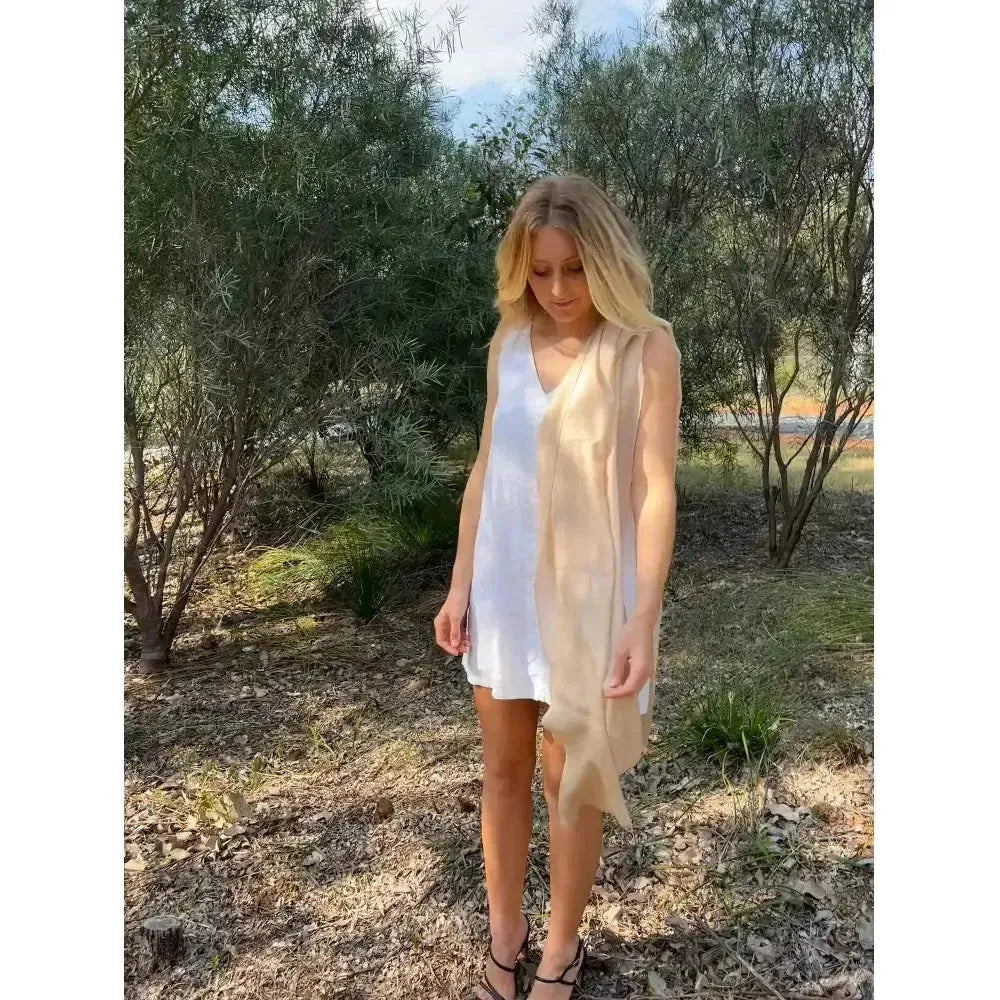
Fold the scarf in half lengthwise, place it around your shoulders, and let the ends hang loose in front. The drape creates elegant, vertical lines that elongate the torso and work with most necklines.
For a refined finish, let one end fall over your shoulder and tuck the other under the opposite arm. This asymmetry adds visual interest without looking fussy, ideal when your dress already has plenty of detail.
The One-Shoulder Wrap
Start with the scarf behind your back and bring both ends forward over one shoulder. This creates a diagonal line that adds drama and structure, particularly flattering on column dresses and slip styles.
Secure the ends with a small pin or brooch if worried about slipping. The one-shoulder wrap photographs well, making it popular for bridesmaids who want a unified look without identical dresses.
The Loose Front Knot
Fold the scarf into a triangle and drape it over your shoulders. Tie the ends loosely at the front, letting the knot sit just below the collarbone, and adjust the drape so the fabric falls softly.
This works best with lightweight fabrics like silk or chiffon. The loose knot reads as relaxed and contemporary, a good match for garden or beach weddings where a formal drape might feel too heavy.
The Belted Shawl Look
Drape the scarf over your shoulders like a shawl, then cinch it at the waist with a slim belt worn over the top. This instantly creates a structured, tailored silhouette from an otherwise loose wrap.
The belted shawl is the solution for sleeveless dresses when you want coverage without losing your waistline, and it transitions a summer dress into autumn with minimal effort. Choose a belt in a neutral tone that picks up a colour from the scarf or shoes.
The Head Scarf or Turban
A head scarf adds a distinct, fashion-forward element. Fold a square scarf into a triangle, place the longest edge at your forehead, and tie the ends at the nape of your neck. Tuck the loose triangle under for a cleaner finish.
Turbans require a longer rectangular scarf. Wrap it around your head, twist the fabric at the front, and tuck the ends securely. This bold choice works best with minimal jewellery and a simple dress, and it solves the problem of wind disrupting your hair outdoors.
Pashmina Styling for Formal Dresses
Pashmina styling for formal dresses comes down to understanding the fabric's weight. A genuine pashmina has a softness and drape that cheaper fabrics cannot replicate, which is why it remains the default for black-tie weddings and evening receptions.
For a strapless gown, drape the pashmina so it sits just off the shoulders, creating a soft frame for the neckline. For a high-neck dress, fold it into a narrow band and wear it like a stole across the upper arms. The goal is always to complement the dress, never to hide it.
A bright white pashmina is surprisingly difficult to find, as many lean cream or ivory. If you are attending a wedding where the bridal party is wearing white, a true white wrap can be a beautiful addition to your outfit. The Knot's guide to wedding guest attire notes that coverage for ceremony settings is often appreciated, particularly in churches or during cooler months.

How to Tie a Shawl for a Wedding by Dress Type
How to tie a shawl for a wedding depends entirely on the silhouette of your dress. The technique that looks stunning on a ball gown can swamp a slip dress, so match the approach to the outfit.
| Dress Type | Best Technique | Why It Works |
|---|---|---|
| Strapless or sweetheart | Classic shoulder drape | Frames the neckline without covering it |
| Sleeveless column | One-shoulder wrap | Adds structure and a diagonal line |
| High neck or halter | Loose front knot | Keeps the focus on the neckline |
| Sleeveless A-line | Belted shawl | Creates a waist and adds coverage |
| Simple slip dress | Head scarf or turban | Adds a fashion-forward focal point |
For a strapless gown, keep the scarf off the shoulders entirely. Drape it over your forearms or let it hang from one shoulder instead, maintaining the clean line of the neckline while still providing warmth.
Choosing the Right Fabric and Colour
Fabric choice determines how the scarf drapes, feels, and photographs. But the decision is not just about aesthetics, it is about matching the material to the conditions of the day, whether you are sitting through a 30-minute outdoor ceremony in April or dancing until midnight in an air-conditioned hall.
Matching Fabric to Weather and Venue
For an outdoor summer wedding in Australia, where temperatures can reach the high 20s even in the evening, chiffon is the standout choice. Its open weave allows air to circulate, keeping you cool while still providing a layer when the sun drops. Silk, by contrast, traps heat, beautiful for a climate-controlled ballroom, but uncomfortable in direct sun.
For autumn and winter weddings in churches or historic buildings without effective heating, wool and cashmere blends are the practical option. A 70% wool, 30% silk blend offers warmth without the bulk of a full knit wrap. Pashmina, technically a type of cashmere from the Changthangi goat, provides approximately three times the insulation of standard sheep's wool at the same weight, which is why a genuine pashmina keeps you warm without looking heavy (peer-reviewed research).
The Shine Factor and Photography
Satin and silk have a natural lustre that catches light and creates bright spots in photographs. This can be flattering in small doses, but a fully satin scarf worn near your face can wash out your complexion in flash photography. Wedding photographers often recommend matte or lightly textured fabrics, like matte silk, crepe, or fine wool, for guests who will be in many photos, so the camera captures your skin tone accurately rather than competing with a reflective surface.
Chiffon sits at the opposite end of the spectrum. It is sheer and light, diffusing light rather than reflecting it, making it an excellent choice for daytime weddings where the sun is harsh and you want a soft, romantic look in pictures. mixing and matching clothes.
Colour Selection Beyond the Obvious
Most advice stops at "avoid white" and "match the palette." But there is a more useful framework: consider the undertone of your dress and choose a scarf that either harmonises or deliberately contrasts.
- Warm undertones (ivory, champagne, terracotta, olive): pair with gold, bronze, burnt orange, or deep emerald.
- Cool undertones (white, silver, blush pink, navy): pair with silver, icy blue, lavender, or charcoal.
- Neutral dresses (black, grey, beige): use the scarf as your colour moment, a jewel tone like sapphire or ruby adds personality without clashing.
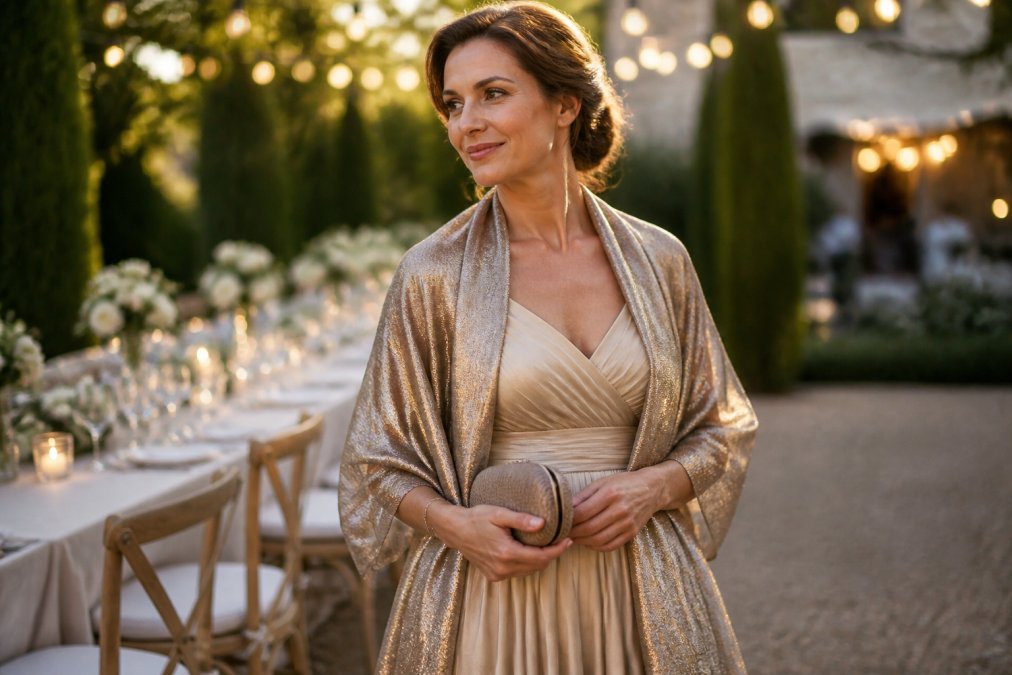
A metallic neutral, champagne, silver, or soft gold, remains the safest choice because it reflects the colours around it. A champagne shawl over a blush dress picks up pink tones; over navy, it reads as warm gold. This chameleon quality is why metallic wraps appear so frequently in wedding party photos.
A Note on Fabric Care During the Day
Delicate fabrics require different handling during the event. Silk scarves can develop water spots if caught in rain, and chiffon snags easily on jewellery or bag hardware. If wearing silk, consider how you will store it during dinner, draping it over a chair can cause creases or pulls. A small silk pouch in your handbag gives you a safe place to tuck it between courses.
For post-event care, most silk and pashmina scarves require dry cleaning or hand washing in cold water with a gentle detergent. Never wring a silk scarf, roll it in a towel to remove excess water, then lay flat to dry. This preserves the natural drape and prevents the fabric from losing its shape.
Wedding Guest Accessory Etiquette
The primary rule of wedding guest accessory etiquette is simple: do not upstage the couple. That means avoiding pure white or ivory pieces that could be mistaken for bridal wear, unless the invitation explicitly suggests otherwise. But scarf etiquette extends beyond colour, it involves ceremony context, cultural sensitivity, and practical awareness of when a scarf should be removed entirely.
The White Scarf Question, Resolved
A bright white pashmina is acceptable when the bridal party is not wearing white, but when in doubt, choose a different shade. Check the invitation or the couple's wedding website for the bridal party's colour scheme. If the bridesmaids are wearing blush or sage, a white wrap will not conflict. If the bride and bridesmaids are in white or ivory tones, a growing trend, avoid white entirely and choose champagne or silver instead.
Ceremony Settings and Head Coverings
In church ceremonies, particularly Catholic, Anglican, or Orthodox services, some guests cover their shoulders as a sign of respect. A scarf draped over the shoulders serves this purpose without looking like a fashion statement. In a synagogue or mosque, head coverings may be expected for women; a silk head scarf in a solid, modest colour is appropriate. If unsure whether a head covering is required, contact the couple or venue in advance, it is better to ask than to arrive unprepared.
For outdoor ceremonies, a scarf worn to protect against wind or sun is practical, but it should not flap noisily during vows. Choose a heavier fabric that stays in place, or secure it with a brooch. The focus should remain on the couple, not on managing your accessories.
When to Remove the Scarf
A scarf is not a permanent part of your outfit. Knowing when to take it off is part of the etiquette. Once seated for dinner, a bulky wrap can feel restrictive; most guests remove it before the meal and drape it over their chair or store it in their bag. During dancing, a long scarf can catch on heels or pull at other dancers, remove it before hitting the dance floor unless it is securely pinned.
Dress Code Nuances
Consider the dress code printed on the invitation. A black-tie wedding calls for luxe fabrics like silk, satin, or cashmere. A casual or beach wedding allows for lighter, more relaxed options. For the "cocktail" dress code, a scarf should be elegant but not overpowering, a medium-weight silk in a solid colour or subtle print works well. Avoid heavy pashminas that read as evening wear and overly casual cotton scarves that belong at a picnic.
Cultural and Religious Considerations
In some cultures, scarves carry specific meanings. In Hindu weddings, a dupatta or scarf may be part of traditional attire, and guests are expected to respect its significance. In Jewish weddings, married women may cover their heads during the ceremony, and a scarf can serve this purpose. If attending a wedding outside your own cultural tradition, a quick conversation with the couple or a mutual friend about expected attire can prevent unintentional faux pas.
The Unspoken Rule: Comfort and Confidence
The final etiquette rule is internal: a scarf should never make you feel self-conscious. If you are constantly adjusting it, worrying about it slipping, or feeling overheated, it will show in your posture and photos. Choose a technique you have practised, a fabric suited to the conditions, and a colour you feel confident in. The best accessory etiquette lets you focus on celebrating the couple rather than managing your outfit.
Common Mistakes to Avoid
The most common mistake is choosing a scarf that competes with the dress. If your gown is heavily embellished, keep the scarf simple. If the dress is plain, use the scarf to add pattern or texture.
Another frequent error is wearing a scarf that is too small. A proper shawl or wrap needs enough fabric to drape elegantly. A scarf that barely covers your shoulders will look awkward and provide no warmth. For formal occasions, choose a generously sized pashmina or shawl.
Finally, do not forget the practical details. Check how the scarf stays in place when you move, and consider whether it will survive an evening of dancing. A silk scarf can slip off satin shoulders, so bring a small pin or brooch as a backup.
Conclusion
Styling a scarf for a wedding is about enhancing your outfit, not hiding it. The techniques in this guide work across dress types, fabrics, and seasons, giving you a versatile toolkit for every formal occasion on your calendar.
Scarves Australia offers a boutique collection of high-quality, affordable scarves, pashminas, shawls, and wraps for both men and women. Our range includes the Champagne Metallic Glamour Shawl for evening elegance, the Silver Grey Metallic Shawl for a cooler shimmer, and the True Bright White Pashmina for those who need a genuinely white wrap. With a wide variety of fabrics and colours for all seasons, finding the perfect piece to express your unique style is simple. Get started with Scarves Australia and add a touch of colour and elegance to your next wedding outfit.


Frequently Asked Questions
How do you wear a scarf as a wedding guest without looking casual?
The fabric and finish decide the formality. Choose silk, satin, chiffon, or pashmina over cotton or knit. A metallic champagne or silver grey shawl adds occasion-ready shimmer that reads as formal. Drape it over the shoulders rather than tying it like an everyday neck scarf, and keep the rest of your accessories simple so the scarf complements, not competes with, your outfit.
What is the best way to drape a pashmina over a formal dress?
For a strapless or sleeveless gown, fold the pashmina in half lengthwise and drape it evenly over both shoulders. Let the ends hang loose at your elbows for a relaxed line. For a one-shoulder dress, gather the pashmina and drape it over the bare shoulder only, securing it with a small brooch if needed. This keeps the neckline visible while adding coverage.
Can you wear a silk scarf with a cocktail dress for a wedding?
Yes, a silk scarf works beautifully with a cocktail dress. Choose a style with a subtle shimmer or a tone that complements the dress colour. Fold it into a slim band and drape it over the shoulders, or knot it loosely at the side for a softer look. A silk scarf adds texture and movement to a simple cocktail dress without overwhelming it.
Are scarves and shawls in or out for 2026 weddings?
Scarves and shawls remain a practical and stylish choice for 2026 weddings. The trend has moved toward versatile pieces that work from ceremony to reception, especially for outdoor or transitional-season events. Lightweight pashminas and metallic shawls are particularly popular because they add elegance while providing warmth when the temperature drops in the evening.
Disclaimer: This article provides general styling guidance. For specific dress code requirements, always refer to the wedding invitation or consult the couple directly.