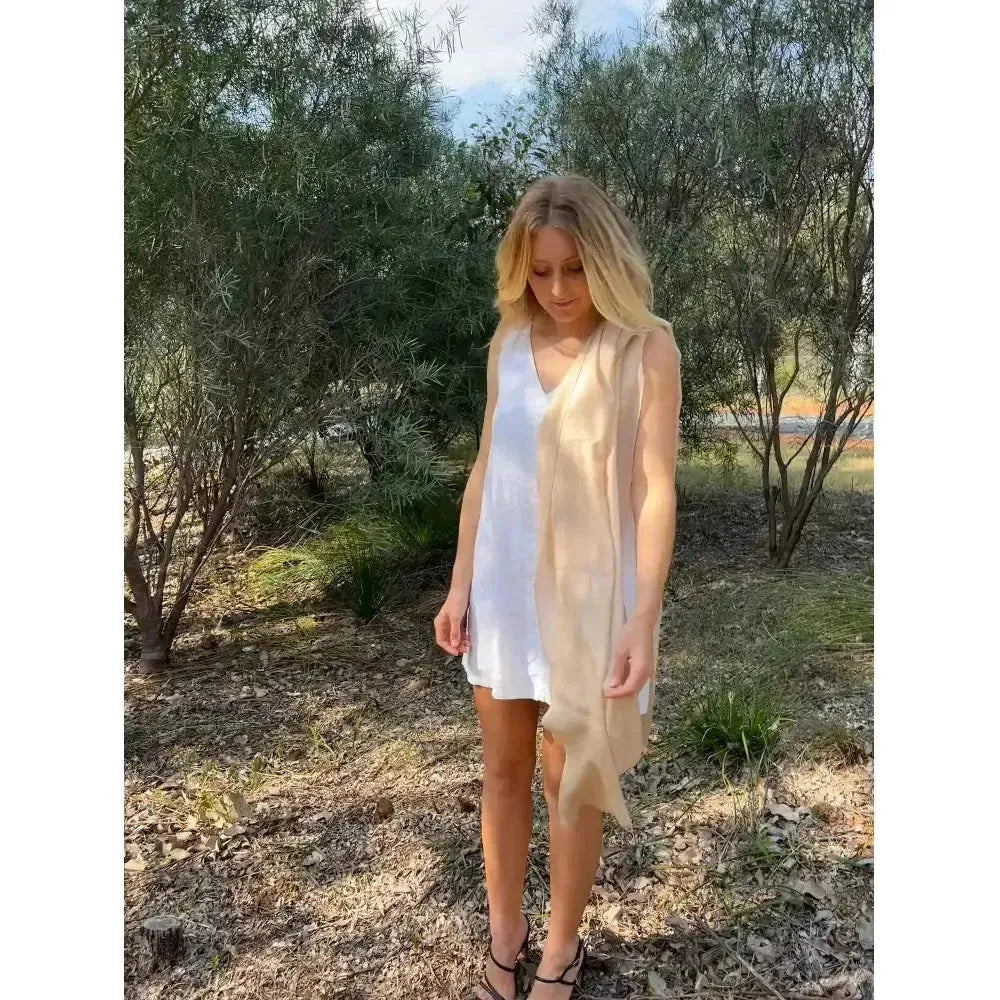

How to Fold a Shawl for Elegance: 7 Styling Methods
Table of Contents
- What You'll Need Before You Start Folding
- Basic Draping Techniques: The Foundation of Elegant Folding
- How to Fold a Shawl Using the Diagonal Fold Method
- How to Wear a Pashmina Elegantly for Any Occasion
- Shawl Styling Tips for Formal Events and Weddings
- How to Secure a Shawl Without a Pin
- Fabric-Specific Folding and Body-Type Customisation
- Common Mistakes to Avoid When Folding a Shawl
- Frequently Asked Questions
Last Updated: September 15, 2026
What You'll Need Before You Start Folding
A shawl is a length of woven or knitted fabric, wider and longer than a standard scarf, worn draped over the shoulders or wrapped around the body. At Scarves Australia, most people who struggle with shawl styling are working against their fabric, not with it.
Before you drape anything, check these basics:
- A shawl that suits the occasion. A lightweight cotton or silk blend drapes softly for daytime; a wool-blend pashmina holds structure for evening wear.
- A full-length mirror. You need to see how the fabric falls from the front and the back.
- A pin or brooch (optional). Some folds need securing; others don't.
- A steamer or a light iron. Creases fight every fold. Smooth the shawl first.
- Clean, dry hands. Oils and moisture mark delicate weaves, especially lighter colours.
One insider tip: fold on a flat surface before you drape. Folding mid-air produces uneven edges.
Basic Draping Techniques: The Foundation of Elegant Folding
The classic shoulder drape and the front toss are the two foundational moves every other technique builds on.
The Classic Shoulder Drape
Fold the shawl in half lengthwise to create a long, narrow panel. Drape it across your back so equal lengths fall over each shoulder, then adjust so the front ends hang evenly.
This is the most versatile drape you'll learn, suiting a fitted dress, plain blouse, or structured coat in almost any fabric weight.
The Front Toss
Hold the shawl behind your back, bring both ends forward over your shoulders, and toss one end across your chest so it rests on the opposite shoulder, an asymmetrical, relaxed look that reads modern rather than formal.
A common mistake is tossing too much fabric. Keep the crossing point near your collarbone so the shawl doesn't swallow your neckline.
How to Fold a Shawl Using the Diagonal Fold Method
The diagonal fold method is the most flattering way to fold a shawl, creating a long diagonal line across the body that lengthens the silhouette.
- Open the shawl fully and hold two opposite corners.
- Bring the corners together so the fabric forms a large triangle.
- Fold the triangle in half once more, lengthwise, to create a narrower band.
- Drape the folded band over one shoulder, letting the point fall at the opposite hip.
- Adjust the tension so the fabric sits close to the body without pulling.
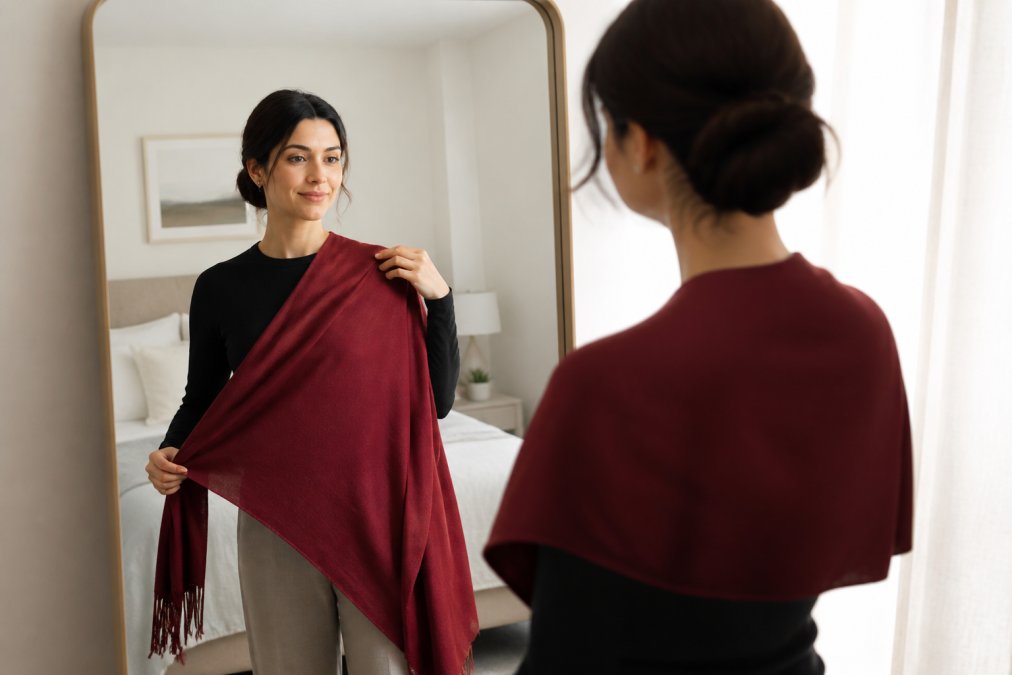
Creating a Loop or Knot
A loop or knot turns a draped shawl into a secured, hands-free layer. Gather both ends in front, cross them once, then pull one end through to form a loose knot, left slightly off-centre for a softer finish.
Tension matters here. A tight knot looks rigid; a loose one slides. Aim for a knot you can slip two fingers under.
How to Wear a Pashmina Elegantly for Any Occasion
A pashmina is the most forgiving shawl to style because its wool blend drapes well and holds a fold. Knowing how to wear a pashmina elegantly comes down to matching the drape to the occasion: relaxed for daytime, structured for evening. Typically a fine wool or wool-silk blend at a light-to-medium weight, it holds a diagonal line without pinning, a featherweight cotton slips, a heavy blanket wool bulges, and pashmina sits in the sweet spot.
Reading the weave before you fold
Run the fabric between your thumb and forefinger. If it springs back with slight body, it will hold a structured fold such as the diagonal or capelet. If it collapses flat, it suits a loose front toss. Most pashmina blends fall into the first category.
Asymmetrical Draping for a Modern Silhouette
Asymmetrical draping means letting one side hang longer than the other, on purpose. Throw the shawl over one shoulder, let the opposite end trail to mid-thigh, and leave the other shoulder bare, the imbalance looks deliberate rather than accidental.
For a pashmina, fold the shawl in half diagonally first so you work with a triangle rather than a rectangle; the bias edge falls in a soft curve instead of a straight line. Keep the trailing end at hip height for daytime and mid-thigh for evening, any longer and it looks like it is falling rather than styled.
This is the fold to reach for when you want a plain outfit to look considered. Pair it with a simple knit or a slip dress and let the shawl do the work.
Shoulder Coverage Techniques
For coverage without bulk, fold the shawl into a wide band and wrap it around both shoulders like a capelet, securing the front with a discreet pin. This keeps the arms free and the neckline framed.
A pashmina takes this fold better than almost any other fabric because its wool content grips against itself. Fold the shawl into a band roughly 30 to 40 centimetres wide, centre it across your back, and bring both ends forward over the shoulders. Cross them once at the collarbone and tuck the top end under the bottom layer rather than knotting it. The friction between the wool layers holds the wrap without a pin.
If you're layering over a sleeveless dress for a formal event, this technique gives you warmth without hiding the dress itself.
Matching the fold to the occasion
- Daytime, casual: front toss or loose shoulder drape, ends left uneven.
- Daytime, smart: capelet wrap with a fine brooch at the collarbone.
- Evening, formal: diagonal fold with the point at the opposite hip, secured with a single pin.
- Evening, cold: double wrap around the neck with the ends tucked into the belt line.
Weather-appropriate pashmina styling
Most guides treat the shawl as purely decorative, but a pashmina is also a layer, and the fold should change with the temperature.
Shawl Styling Tips for Formal Events and Weddings
Match the fold to the fabric, not just the outfit
Weather-appropriate formal styling
Practical rules that hold up in practice
Using Accessories: Brooches and Pins
How to Secure a Shawl Without a Pin
Three methods that work:
Fabric-Specific Folding and Body-Type Customisation
Matching the Fold to Your Fabric
Adjusting Folds for Your Body Type
Common Mistakes to Avoid When Folding a Shawl
Frequently Asked Questions
How do you fold a shawl to look elegant?
Start with a diagonal fold: hold the shawl by two opposite corners and bring them together to form a triangle. Drape the longest edge across your front and let the point fall at the back, or bring both ends forward and knot them loosely. A soft wool blend like a pashmina holds the fold better than slippery fabrics. Adjust the fabric so it sits evenly on both shoulders and smooth out any wrinkles for a polished finish.
Can you fold a shawl to create arm coverage?
Yes. Fold the shawl in half lengthwise to create a long rectangle, then drape it across your back so equal lengths hang over each arm. Cross the ends in front and tuck them under the opposite arm, or tie a loose knot at the front. This wrap style covers the upper arms while keeping your hands free, which works well for formal events where you want coverage without holding the fabric all night.
How do you keep a shawl from slipping off your shoulders?
Choose a fabric with some texture or weight, such as a wool blend, rather than smooth silk. Fold the shawl into a triangle and bring both ends around your neck once before letting them fall forward. The added tension around the neck stops the fabric from sliding. You can also tuck the ends under your belt or bag strap for extra security without needing a pin.
What is the best way to wear a shawl for a formal wedding?
For a wedding, go with the diagonal fold draped over one shoulder and secured with a decorative brooch on the opposite side. This creates an asymmetrical, sophisticated silhouette. Choose a colour that complements your outfit rather than competing with it. A deep red wine or black pashmina works with most formal colour palettes. Keep the fold clean and avoid bulky knots that distract from the neckline.
Choosing the right fold is only half of it; the other half is having a shawl worth folding. At Scarves Australia, our boutique range of pashminas, shawls and wraps is built for exactly this: pieces that hold a drape, suit both men and women, and come in fabrics and colours for every season. Browse the collection and find the shawl that makes your next fold effortless.