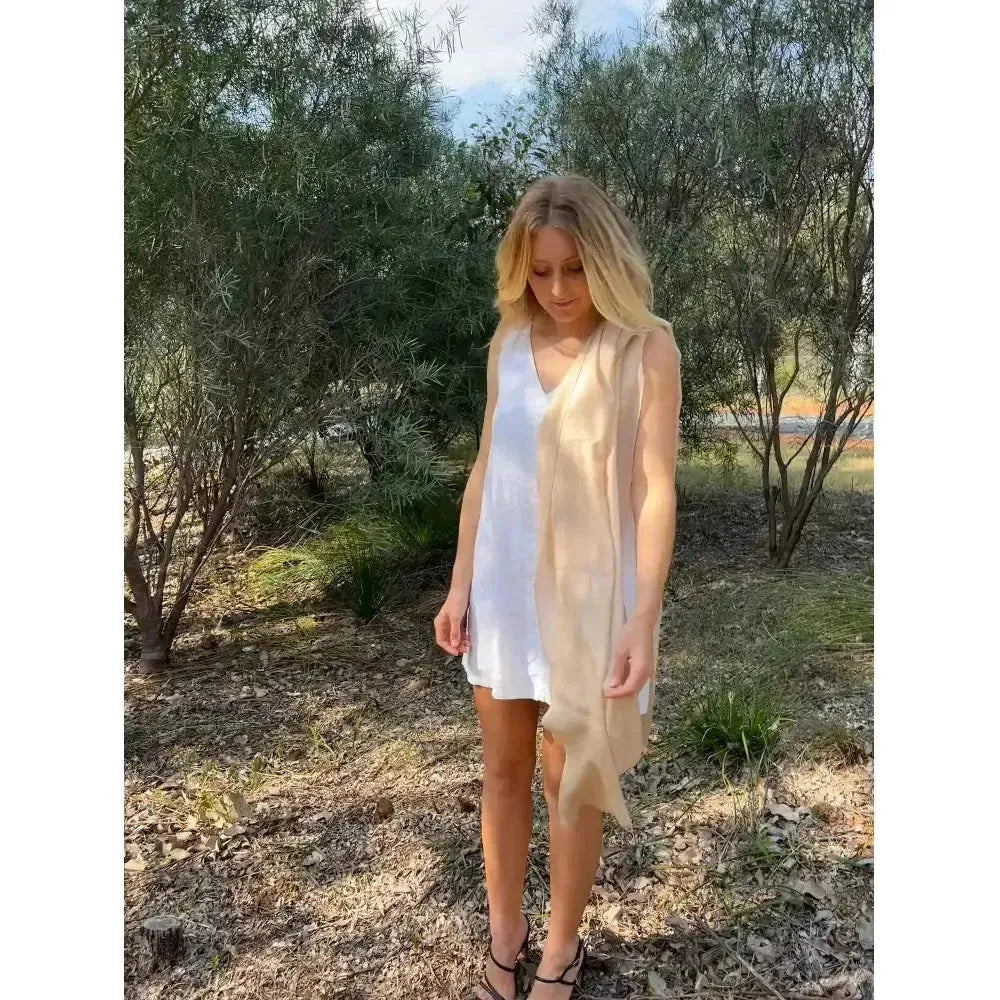

Are Affordable Scarves Worth Buying? A 2026 Review
Table of Contents
- What 'Affordable' Actually Means for Scarves in 2026
- How to Tell If a Scarf Is High Quality Before You Buy
- Natural vs Synthetic Fibre Scarves: What Changes on Your Skin
- Cost-Per-Wear: The Number That Settles the Argument
- Caring for Affordable Scarves So They Last More Than One Season
- Where Affordable Scarves Fall Short (And Where They Don't)
- Verdict: When an Affordable Scarf Is the Smarter Buy
- Frequently Asked Questions
Last Updated: September 10, 2026
What 'Affordable' Actually Means for Scarves in 2026
Affordable scarves are priced so a natural-fibre piece costs less than a weekly grocery shop. Affordable scarves are priced so a natural-fibre piece costs less than a weekly grocery shop. The gap between a $15 synthetic scarf and a $79 pashmina is material composition and how many seasons it survives. This guide separates a genuine bargain from a false economy.
How to Tell If a Scarf Is High Quality Before You Buy
You can judge a scarf's quality before purchase by checking four things in order: fibre content, fibre density, weave quality and edge finish. A high-quality scarf holds its shape when you lift a corner, feels substantial without stiffness, and shows no loose threads at the hem. Most affordable scarves fail at the edges first, because hemming is the step brands cut to hit a price point.
Work through this checklist in order, it takes about 90 seconds:
- Read the fibre label first. "100% wool", "mulberry silk" or "cashmere blend" tells you more than any product photo.
- Pinch the fabric between thumb and forefinger. It should spring back, not stay creased.
- Hold it to a window. Light passing through evenly means consistent fibre density.
- Check the hem. Hand-rolled or neatly stitched edges outlast glued or raw-cut ones.
- Rub the surface gently against a dark sleeve. Visible fibre transfer signals poor textile integrity.
- Weigh it in your hand. A mid-weight pashmina-style shawl around 200g drapes better than a papery alternative.
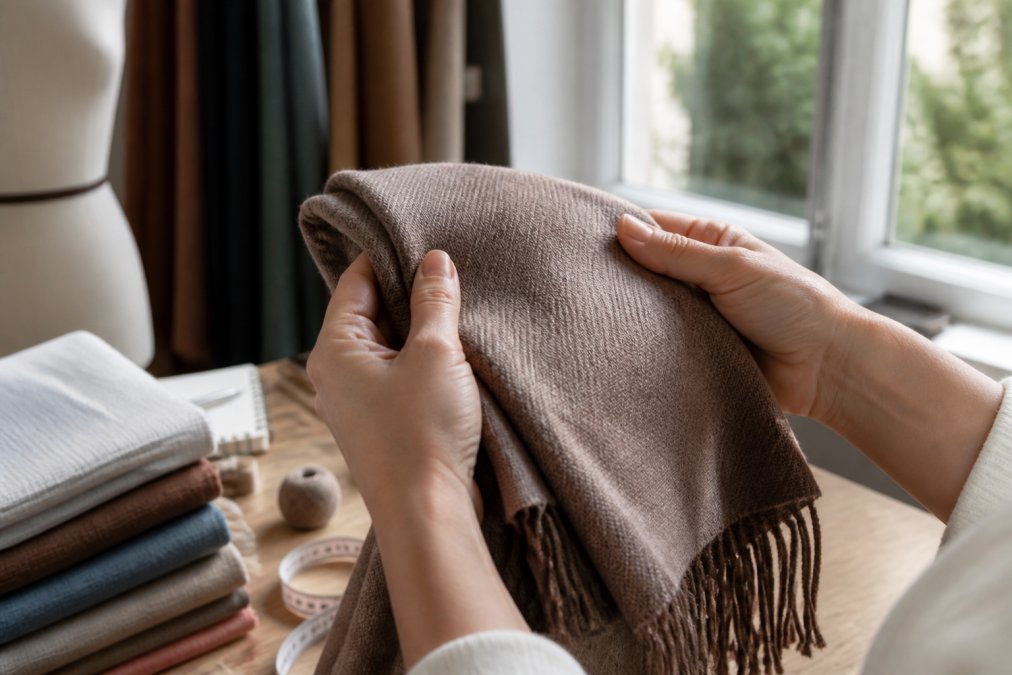
The Touch Test: What Your Fingers Should Notice
The Touch Test is a three-part hand check: warmth, softness and recovery. Cup the fabric in your palm for five seconds, natural fibres warm to your skin, synthetics stay cool and slippery. Brush the surface: good wool blends feel dry and smooth, while early pilling means short-staple yarn that will worsen. Scrunch a section and release, a quality scarf relaxes back within seconds; if it stays crumpled, it will look tired within a month.
Natural vs Synthetic Fibre Scarves: What Changes on Your Skin
Natural fibres breathe and regulate temperature, while synthetics trap heat and moisture against the skin. That difference explains most of the comfort gap between a wool-blend pashmina and a polyester scarf at a similar price. Wool, cashmere blends and silk wick moisture and let air circulate, so they feel warm in winter without becoming clammy indoors. Acrylic and polyester insulate but hold odour and static, and pill faster because the fibres are shorter.
For sensitive skin, this is the deciding factor. Natural fibres are less likely to trigger itch or irritation, and wool blends are far more breathable than their reputation suggests. If you react to coarse wool, a soft-touch wool blend or silk-mix scarf is the comfortable middle ground.
Fibre Type |
Breathability |
Warmth |
Pilling Risk |
Best For |
|---|---|---|---|---|
Wool / cashmere blend |
High |
High |
Low |
Winter layering, travel |
Mulberry silk |
High |
Low |
Very low |
Formal events, warm weather |
Cotton |
High |
Low |
Low |
Everyday, transitional seasons |
Acrylic / polyester |
Low |
Medium |
High |
Budget temporary wear |
The Skin-Health Angle Most Guides Ignore
Most buying guides stop at breathability. The more useful question for reactive skin is what the fibre and dye bath do to your neck, jaw and wrists, where a scarf sits against skin for hours. Irritation typically comes from three sources: coarse fibre diameter, residual dye or finishing chemicals, and trapped moisture that softens the skin barrier.
Fibre diameter, not fibre name, drives itch. Wool fibre is measured in microns (peer-reviewed research). Merino typically sits in the fine range, while many generic "wool" scarves use coarser fibre that pokes through the skin and triggers the histamine response people call "the wool prickle." A cashmere or fine-merino blend at the same price as a coarse lambswool scarf will almost always feel calmer on the neck.
Dye and finish residue is the hidden irritant. Cheap scarves are often dyed fast and finished with softeners or formaldehyde-based anti-wrinkle agents to make stiff fibre feel plush in the shop (the CDC). On sensitive skin, that coating can cause contact dermatitis, redness, itching or a raised rash along the collarbone. Test at home: dampen a white cloth and rub it firmly along the scarf. Heavy colour transfer means loose dye that will also transfer to your skin and collar.
Synthetics trap sweat against the skin. Polyester and acrylic don't absorb moisture, so perspiration sits on the skin surface. For anyone prone to eczema, rosacea or heat rash, that trapped moisture is often the trigger rather than the fibre itself. If you love a synthetic scarf but react to it, a cotton or silk-mix layer underneath breaks direct contact.
If you have a known wool allergy rather than simple sensitivity, silk, cotton and bamboo blends are safer. If you react to synthetic dyes, look for undyed, naturally pigmented or OEKO-TEX-style low-impact dye claims on the label, and treat vague "eco" wording as marketing until the certification is named.
Matching Fibre to Your Skin and Season
Match the fibre to both the season and your skin's tolerance, not just the outfit. Fine merino or a cashmere blend for cold, dry winters; silk or a silk-cotton mix for transitional weather and heated offices; cotton for humid days. If your skin is reactive, spend your budget on fibre fineness and a named dye standard rather than a brand name, that is where the comfort difference lives.
Cost-Per-Wear: The Number That Settles the Argument
Cost-per-wear is the purchase price divided by the number of times you actually wear the item. A $15 scarf worn twice costs $7.50 per outing. A $79 pashmina worn 40 times a year for three years costs about $0.66 per wear. That maths is why affordable scarves in natural fibres routinely beat both fast-fashion bargains and luxury accessories on value. luxury clothing value.
The catch is the denominator: cost-per-wear only works if the scarf genuinely gets worn, which depends on how versatile the colour and drape are. A neutral mid-beige or navy piece pairs with almost everything; a bold novelty print worn once a season never recovers its cost, however cheap it was. Ask how many outfits in your existing wardrobe it works with, if fewer than five, the price is irrelevant.
Caring for Affordable Scarves So They Last More Than One Season
Gentle hand washing in cool water with a mild detergent is the single best way to extend a scarf's life. Machine washing, tumble drying and harsh chemicals break down natural fibres and accelerate pilling, which is how a good affordable scarf becomes a tired one within months. Proper care costs almost nothing and adds years.
Follow these habits:
- Hand wash in cool water, never hot, and never wring the fabric.
- Use a mild wool or delicates detergent rather than standard laundry powder.
- Lay flat to dry in shade. Hanging wet stretches the weave out of shape.
- Store folded rather than hung, and keep knits away from sharp jewellery hooks.
- Rotate your scarves so no single piece takes all the wear.
- Deal with pilling using a fabric comb, not a razor.
A common mistake is treating a wool-blend shawl like a cotton t-shirt. Twenty minutes of careful washing twice a season is the whole maintenance bill.
Where Affordable Scarves Fall Short (And Where They Don't)
Affordable scarves fall short in three predictable places: edge finishing, colour consistency between dye lots, and the fibre blend ratio. They hold up in everyday wear, warmth and styling versatility, what most buyers actually need. Understanding the trade-offs stops you expecting a $69 shawl to behave like a $600 one.
The Three Failure Points, in Detail
Edge finishing. Hand-rolled hems are labour-intensive and rare below a certain price point; machine-stitched edges are durable but less refined. Watch for the raw-cut or glued hem, where fabric is sliced and sealed rather than turned and stitched. Run a fingernail along the edge: a stiff, plastic-like ridge or fraying after one wash means the hem will fail first.
Blend ratios. "Cashmere blend" can mean anything from 5% to 70% cashmere. The label should be specific; if it isn't, assume the lower end. A 5% cashmere, 95% acrylic scarf feels soft in the shop and pills within weeks, because the acrylic carries the structure and the cashmere is only a surface finish.
Dye consistency. Natural fibres absorb dye unevenly, so a restock may differ slightly from your original. Buy matching pieces in one order, two navy scarves from different batches can read as two different navies under office lighting.
Signs of Poor Craftsmanship to Check Before You Pay
Beyond the label, four physical tells separate a well-made affordable scarf from a false economy:
- Twisted or wavy selvedge. Lay the scarf flat. A quality piece has straight, even edges; a cheap one curls or waves because the weave tension is inconsistent.
- Sparse weave held to light. Hold it against a window. Patchy light transmission means uneven fibre density and cold spots in winter.
- Short-staple pilling. Rub the surface briskly with your palm. If pills form immediately, the yarn uses short fibres that will shed and mat with wear.
- Chemical smell. A sharp, vinegar or plastic odour suggests residual dye or finishing agents that will also irritate skin and fade in the wash.
The Environmental Case for Buying Fewer, Better Scarves
Where affordable scarves win outright is the environmental comparison. Fast-fashion scarves are produced in enormous volumes and discarded quickly, adding to textile waste, while a natural-fibre scarf worn for years avoids that cycle entirely. The Australian Government's textile waste guidance outlines how much clothing and textile material ends up in landfill each year, and the figures make the case for buying fewer, better pieces. The practical takeaway is not that all affordable scarves are green, a $15 acrylic scarf worn twice is worse than a $79 wool blend worn for five winters. The metric that matters is wears per item, not price per item.
Resale Value: Which Affordable Scarves Hold Money
Most affordable scarves lose value immediately if resold, but the loss is not evenly distributed:
- Natural-fibre classics hold best. Neutral-coloured cashmere, merino and silk scarves in good condition retain a meaningful share of their price on secondhand marketplaces, because buyers search by fibre and colour, not by brand.
- Trend-led prints and synthetics hold worst. Novelty patterns and acrylic blends typically resell for a fraction of retail, if at all.
- Condition drives everything. A scarf with pilling, snags or faded dye has almost no resale value regardless of original fibre. This is another reason care matters: a well-kept $79 pashmina can be resold or gifted on, while a neglected one cannot.
The implication is simple: if you might resell, buy neutral, natural-fibre, well-finished pieces and keep them in good condition. If you buy for personal wear, ignore resale and optimise for cost-per-wear instead.
The three failure points, hem, blend ratio and dye consistency, are where affordable scarves lose. The three wins, natural fibre, neutral colour and sound construction, are where they beat both fast fashion and luxury on value, and often on resale.
Verdict: When an Affordable Scarf Is the Smarter Buy
An affordable scarf is the smarter buy whenever the fibre is natural, the construction is sound and the colour works with at least five outfits you already own, you get the warmth, drape and longevity of a quality accessory without the luxury markup. Affordable scarves lose when the price is low because the material is synthetic and the edges are raw, since those pieces rarely survive a full season.
Our pick for most people is the Pashmina Shawl Light Beige Cashew at $125.00. It is a warm, soft pashmina-style shawl in a neutral that pairs with almost anything, and will become your “Go to” for every season and occasion thus optimising cost per wear. For a flawless classic, the Black Pashmina Shawl at $125.00 is the piece that never dates, while the Pashmina Scarf Navy Blue at $135.00 suits anyone building a work wardrobe. If you are buying for someone else, a Gift Card from $15.00 lets them choose their own.
Frequently Asked Questions
How much should you pay for a scarf?
There is no single correct figure, but the useful question is cost-per-wear. A $125 pashmina worn twice a week through autumn and winter works out to a few dollars per wear within a season. A $39 synthetic scarf worn three times before it pills costs more per outing.
What are the key differences between synthetic and natural fibre scarves?
Natural fibres such as wool, cashmere blends and mulberry silk breathe, regulate temperature and resist pilling when the weave is dense. Synthetic materials trap heat, build static and pill faster with friction. For anyone with sensitive skin, natural fibres are also less likely to trigger irritation. The trade-off is price and care: natural fibres usually need gentle hand washing, while synthetics tolerate machine cycles but age quickly.
How can you tell if a scarf is high quality before buying?
Hold it up to light and check the weave for gaps or thin patches. Rub the fabric between your fingers; a dense, smooth hand-feel signals better fibre density. Look at the edges and fringe, which should be neatly finished rather than fraying. Finally, scrunch it in your hand and release. Quality fabric springs back with few creases, while loose, low-density weave stays crushed.
Do affordable scarves offer good value for money?
They can, provided the material composition is honest and the construction holds up. A wool blend shawl at $79 that survives three winters delivers better value than a fast-fashion scarf replaced every few months. Check the fibre content, the weave density and the return policy before you commit. Affordable scarves become poor value only when the fabric pills, snags or loses shape after a handful of wears.
What materials should you look for in a budget-friendly scarf?
Look for wool blends, cashmere mixes and pashmina-style fabrics rather than unnamed polyester. A mid-weight 200g shawl offers enough thermal insulation for cooler months without feeling bulky. Mulberry silk suits lighter, dressier styles. Avoid scarves with no fibre breakdown on the label, since material composition is the single strongest signal of how the piece will wear, drape and age.